2025 Annual Drinking Water Quality Report
Liberty Waterworks
Liberty, Indiana
PWSID IN5281001
What is in this drinking water quality report?
Liberty Waterworks is pleased to present this year’s Annual Drinking Water Quality Report. This report is designed to keep you informed about the quality of your drinking water from January 1 to December 31, 2025. Our goal is to provide you, the customer, with a safe and dependable supply of drinking water. We are pleased to report that our drinking water is safe and meets all federal and state requirements.
In this report you will find the most current test results regulated by IDEM (Indiana Department of Environmental Management) and the EPA (Environmental Protection Agency). General information on Liberty Waterworks drinking water.
(Este informe contiene información muy importante sobre su agua potable. Tradúzcalo o hable con alguien que lo entienda bien.)
Attention Landlords and Apartment owners Please share this information with your tenants. It includes important information about your drinking water.
General information about drinking water
Some people may be more vulnerable to contaminants in drinking water than the general population. Immuno-compromised persons such as persons with cancer undergoing chemotherapy, persons who have undergone organ transplants, people with HIV/AIDS or other immune system disorder, some elderly, and infants can be particularly at risk from infections. These people should seek advice about drinking water from their healthcare providers. EPA/CDC guidelines on appropriate means to lessen the risk of infection by cryptosporidium and other microbiological contaminants are available from the Safe Drinking Water Hotline (800-426-4791).
In order to ensure that tap water is safe to drink, EPA prescribes regulations which limit the amount of certain contaminants in water provided by public water systems. FDA regulations establish limits for contaminants in bottled water which must provide the same protection for public health.
Liberty Waterworks routinely monitors for contaminants in your drinking water. We test for around 10 regulated contaminants and conduct approx. 87 tests. We stay informed with the US EPA and the Indiana Department of Environmental Management to ensure that existing standards and new regulations benefit our customers.
We are dedicated to provide top quality water to every tap. We ask that all our customers help us protect our water sources, which are the heart of our community, our way of life, and our children’s future.
To our valued customers: We want to keep you informed with your water utility. If you have any questions about this report or concerning your water utility, please contact the Town hall at 765-458-5823 or stop in at our office at 101 Brownsville Ave. Liberty, IN. 47353
Where does my drinking water come from?
The source of Liberty’s drinking water is groundwater produced from two active wells located 4 miles west of Liberty on S.R. 44. This well Field is Completed in the Outwash Aquifer adjacent to the East Fork Whitewater River.
Sources of drinking water (both tap and bottled water) include rivers, lakes, streams, ponds, reservoirs, springs and wells. As water travels over the surface of the land or through the ground, it dissolves naturally occurring minerals and, in some cases, radioactive material, and can pick up substances resulting from the presence of animals or from human activity.
QUICK FACTS: Liberty Waterworks serves Liberty and Brownsville from the Outwash Aquifer. The groundwater supply is treated with chlorine to maintain water quality in the distribution system.
Protecting your drinking water
Protecting drinking water at its source is an important part of the process to treat and deliver high quality water. It takes a community effort to protect our shared water resources. This includes utilities, businesses, residents, government agencies, and organizations. Everyone who lives, works, and plays in the area has a role and stake in clean water supplies.
Liberty Waterworks has implemented a Wellhead Protection Plan. There are copies of the plan and educational material are available at the Town Hall. The public can also attend the Liberty Town Council Meetings at 6:00 P.M. on the first and third Monday of every month located at 101 Brownsville Ave. Liberty, IN. 47353.
What can you do to help protect your drinking water?
Quality drinking water starts upstream. Everyone can help maintain and improve drinking water supplies through the following actions.
- Properly dispose of pharmaceuticals, household chemicals, oils and paints.
- Check for leaks from automobiles and heating fuel tanks. Clean up any spills using an absorbent material like cat litter.
- Clean up after your pets and limit the use of fertilizers and pesticides.
- Avoid dumping anything down storm drains.
Know of a spill? Report any spills, illegal dumping or suspicious activity to the Town Hall at: 765-458-5823 or to the Indiana Department of Environmental Management at: 1-888-233-7745.
Contaminants that may be present in source water:
- Microbial Contaminants such as viruses and bacteria, which may come from sewage treatment plants, septic systems, agricultural livestock operations, and wildlife.
- Inorganic Contaminants such as salts and metals, which can be naturally-occurring or result from urban storm water runoff, industrial or domestic wastewater discharges, oil and gas production, mining, or farming.
- Pesticides and Herbicides, which may come from a variety of sources such as agriculture, storm water runoff, and residential use.
- Organic Chemicals, including synthetic and volatile organic chemicals, which are byproducts of industrial processes, petroleum production, and can also come from gas stations, urban storm water run-off, and septic systems.
- Radioactive materials, which can be naturally occurring or the result of oil and gas production and mining activities.
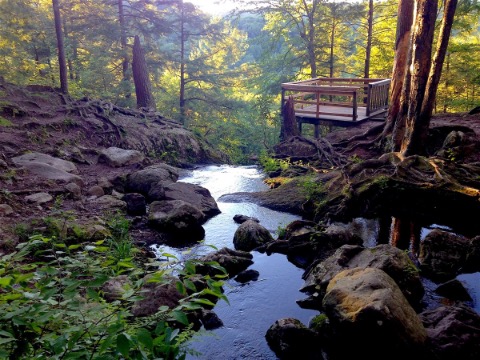
Your water utility is here for you. Liberty Waterworks performs daily, monthly, and yearly tests to ensure safe drinking water for its customers. If you want to know more you can contact our Town Hall at 765-458-5823
Information on Lead
Lead in drinking water is primarily from materials and parts used in service lines and in home plumbing. Homes built before 1930 are more likely to have lead plumbing systems. After the amendment was made to the Safe Drinking water act in 1986, the installation of lead pipes or material was banned. If present, elevated levels of lead can cause serious health problems, especially for pregnant women and young children.
Lead in drinking water is primarily from materials and components associated with service lines and home plumbing. Town of Liberty is responsible for providing high quality drinking water, but cannot control the variety of material used in plumbing components. When your water has been sitting for several hours, you can minimize the potential for lead exposure by flushing your tap for 30 seconds to 2 minutes before using water for drinking or cooking.
If you are concerned about lead in your water, you may wish to have your water tested. Information on lead in drinking water, testing methods, and steps you can take to minimize exposure is available from the Safe Drinking Water Hotline at https://www.epa.gov/safewater/lead
There is no safe level of lead in drinking water. Exposure to lead in drinking water can cause serious health effects in all age groups, especially pregnant people, infants (both formula-fed and breastfed), and young children. Some of the health effects to infants and children include decreases in IQ and attention span. Lead exposure can also result in new or worsened learning and behavior problems.
The children of persons who are exposed to lead before or during pregnancy may be at increased risk of these harmful health effects. Adults have increased risks of heart disease, high blood pressure, kidney or nervous system problems. Contact your health care provider for more information about your risks.
Infants and children are typically more vulnerable to lead in drinking water than the general population. It is possible that lead levels at your home may be higher than at other homes in the community as a result of materials used in your home’s plumbing. If you are concerned about elevated lead levels in your home’s water, you may wish to have your water tested and flush our tap for 30 seconds to 2 minutes before using tap water. Additional information is available from the Safe Dinking Water Hotline (800-426-4761)
What is your service line material?
In 2021, the U.S. EPA and IDEM (Indiana Department of Environmental Management) revised the Lead and Copper Rule requiring all Community water systems to remove 100% of lead service lines. Liberty Waterworks took inventory of both the system owned water lines and the customer owned service lines and put in on an easy to online map.
To access the Liberty Waterworks publicly available lead service line inventory, please use this link: https://pws-ptd.120wateraudit.com/libertywaterworks Or you can access the same inventory by going to our website: https://libertyin.gov/lead-line/
Utility-owned vs. Customer-owned portion of the service line
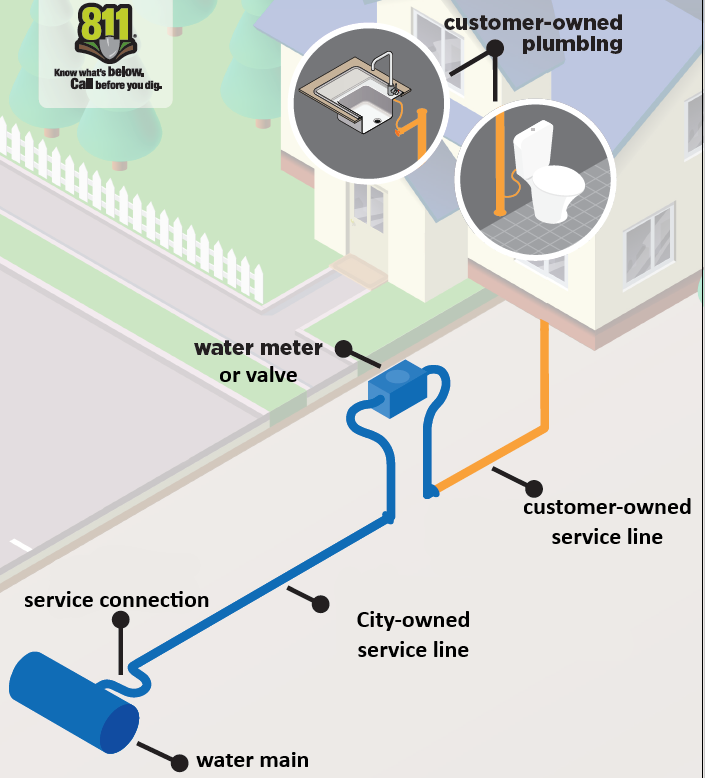
Please Note
If your service line contains lead, it does not mean you cannot use water as you normally do. Liberty Waterworks tests for lead in drinking water and our water meets state and federal regulations.
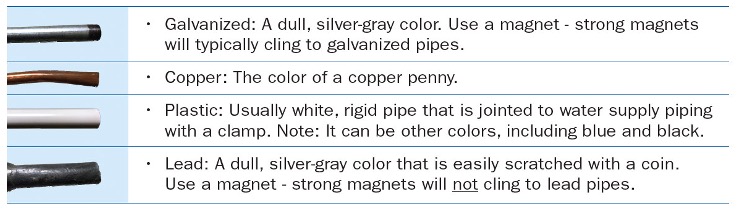
Types of pipe
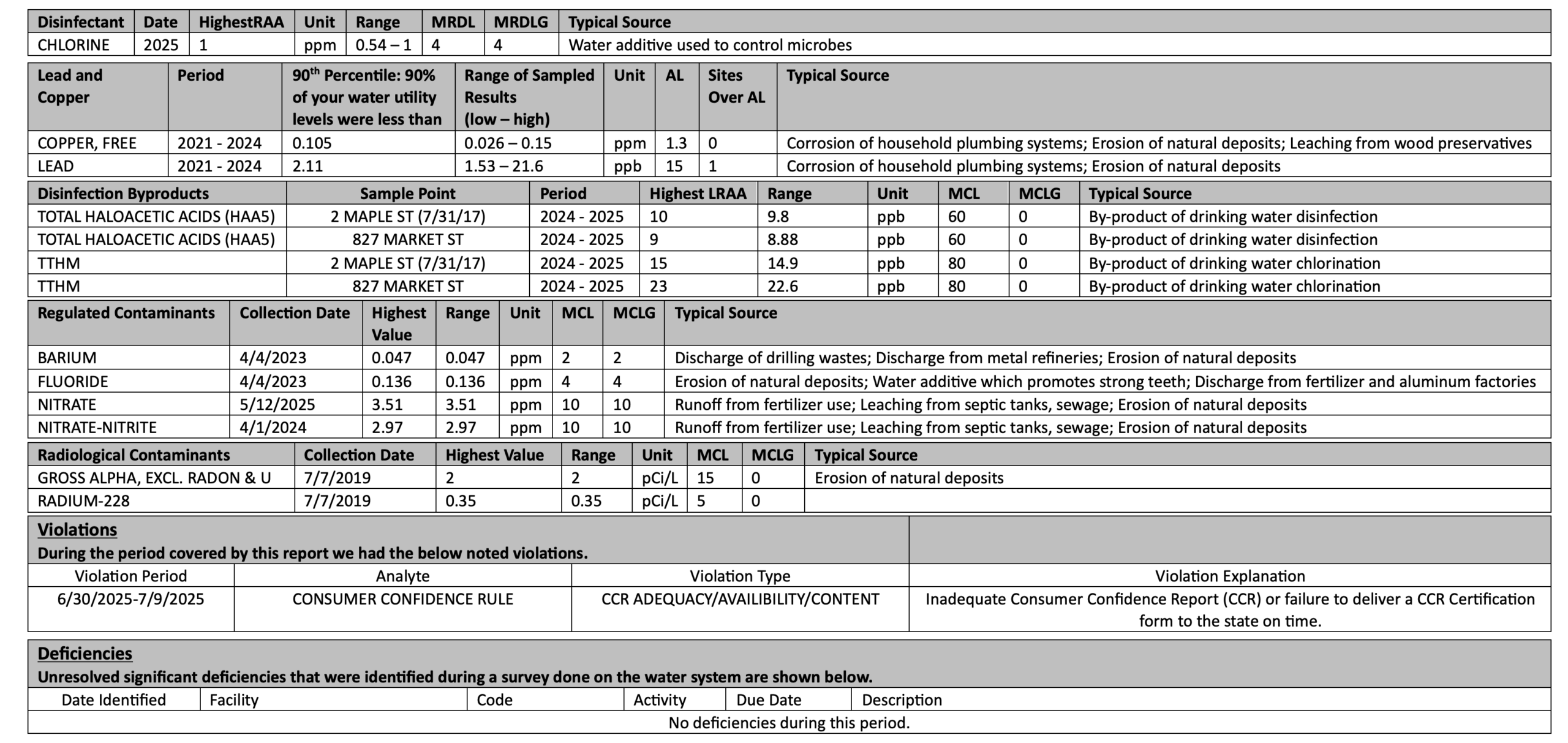
Average Water Quality Data For 2025
|
Disinfectant |
Date |
HighestRAA |
Unit |
Range |
MRDL |
MRDLG |
Typical Source |
|
CHLORINE |
2025 |
1 |
ppm |
0.54 – 1 |
4 |
4 |
Water additive used
to control microbes |
|
Lead and Copper |
Period |
90th Percentile: 90% of your water
utility levels were less than |
Range of Sampled Results |
Unit |
AL |
Sites Over AL |
Typical Source |
|
COPPER, FREE |
2021 - 2024 |
0.105 |
0.026 – 0.15 |
ppm |
1.3 |
0 |
Corrosion of
household plumbing systems; Erosion of natural deposits; Leaching from wood
preservatives |
|
LEAD |
2021 - 2024 |
2.11 |
1.53 – 21.6 |
ppb |
15 |
1 |
Corrosion of
household plumbing systems; Erosion of natural deposits |
|
Disinfection Byproducts |
Sample Point |
Period |
Highest LRAA |
Range |
Unit |
MCL |
MCLG |
Typical Source |
|
TOTAL HALOACETIC
ACIDS (HAA5) |
2
MAPLE ST (7/31/17) |
2024 - 2025 |
10 |
9.8 |
ppb |
60 |
0 |
By-product of
drinking water disinfection |
|
TOTAL HALOACETIC
ACIDS (HAA5) |
827
MARKET ST |
2024 - 2025 |
9 |
8.88 |
ppb |
60 |
0 |
By-product of
drinking water disinfection |
|
TTHM |
2
MAPLE ST (7/31/17) |
2024 - 2025 |
15 |
14.9 |
ppb |
80 |
0 |
By-product of
drinking water chlorination |
|
TTHM |
827
MARKET ST |
2024 - 2025 |
23 |
22.6 |
ppb |
80 |
0 |
By-product of
drinking water chlorination |
|
Regulated Contaminants |
Collection Date |
Highest Value |
Range |
Unit |
MCL |
MCLG |
Typical Source |
|
BARIUM |
4/4/2023 |
0.047 |
0.047 |
ppm |
2 |
2 |
Discharge of
drilling wastes; Discharge from metal refineries; Erosion of natural deposits |
|
FLUORIDE |
4/4/2023 |
0.136 |
0.136 |
ppm |
4 |
4 |
Erosion of natural
deposits; Water additive which promotes strong teeth; Discharge from
fertilizer and aluminum factories |
|
NITRATE |
5/12/2025 |
3.51 |
3.51 |
ppm |
10 |
10 |
Runoff from
fertilizer use; Leaching from septic tanks, sewage; Erosion of natural
deposits |
|
NITRATE-NITRITE |
4/1/2024 |
2.97 |
2.97 |
ppm |
10 |
10 |
Runoff from
fertilizer use; Leaching from septic tanks, sewage; Erosion of natural
deposits |
|
Radiological Contaminants |
Collection Date |
Highest Value |
Range |
Unit |
MCL |
MCLG |
Typical Source |
|
GROSS ALPHA, EXCL.
RADON & U |
7/7/2019 |
2 |
2 |
pCi/L |
15 |
0 |
Erosion of natural
deposits |
|
RADIUM-228 |
7/7/2019 |
0.35 |
0.35 |
pCi/L |
5 |
0 |
|
|
Violations |
|
||
|
Violation
Period |
Analyte |
Violation
Type |
Violation
Explanation |
|
6/30/2025-7/9/2025 |
CONSUMER
CONFIDENCE RULE |
CCR
ADEQUACY/AVAILIBILITY/CONTENT |
Inadequate
Consumer Confidence Report (CCR) or failure to deliver a CCR Certification
form to the state on time. |
|
Deficiencies |
|||||
|
Date
Identified |
Facility |
Code |
Activity |
Due Date |
Description |
|
No
deficiencies during this period. |
|||||
Our water system tested a minimum of 2 samples per month in accordance with the Total Coliform Rule for microbiological contaminants. With the microbiological samples collected, the water system collects disinfectant residuals to ensure control of microbial growth.
Regulated Contaminants
In the tables above, we have shown the regulated contaminants that were detected. Chemical Sampling of our drinking water may not be required on an annual basis; therefore, information provided in this table refers back to the latest year of chemical sampling results.
Definition of terms
In the tables above, you will find many terms and abbreviations you might not be familiar with. To help you better understand these terms, we’ve provided the following definitions:
Action Level (AL): The concentration of a contaminant which, if exceeded, triggers treatment or other requirements which a water system must follow.
Action Level Goal (ALG):The level of a contaminant in drinking water below which there is no known or expected risk to health. ALGs allow for a margin of safety.
Level 1 Assessment: A Level 1 assessment is a study of the water system to identify potential problems and determine (if possible) why total coliform bacteria have been found in our water system.
Level 2 Assessment: A Level 2 assessment is a very detailed study of the water system to identify potential problems and determine (if possible) why an E. coli MCL violation has occurred and/or why total coliform bacteria have been found in our water system on multiple occasions.
Maximum Contaminant Level (MCL): The highest level of a contaminant that is allowed in drinking water. MCLs are set as close to the MCLGs as feasible using the best available treatment technology.
Maximum Containment Level Goal (MCLG): The level of a contaminant in drinking water below which there is no known or expected risk to health. MCLGs allow for a margin of safety.
Maximum Residual Disinfectant Level (MRDL): The highest level of disinfectant allowed in drinking water. There is convincing evidence that addition of disinfectant is necessary for control of microbial contaminants.
Maximum Residual Disinfectant Level Goal (MRDLG): The level of a drinking water disinfectant below which there is no known or expected risk to health. MRDLGs do not reflect the benefits of the use of disinfectants to control microbial contaminants.
Treatment Technique (TT): A required process intended to reduce the level of a contaminant in drinking water.
Variances and Exemptions: State or EPA permission not to meet an MCL or Treatment Technique under certain conditions.
AVG: Average – Regulatory compliance with some MCLs are based on running annual average of monthly samples.
LRAA: Locational Running Annual Average.
mrem: Millirems per year (a measurement of radiation absorbed by the body)
ppb: Micrograms per liter (ug/L) or Parts Per Billion – or one ounce in 7,350,000 gallons of water.
ppm: Milligrams per liter (mg/L) or Parts Per Million – or once ounce in 7,350 gallons of water.
pCi/L: Picocuries per Liter is a measure of the radioactivity in water.
na: Not applicable.